

My Role and Workflow
My Role: UX Designer
Project Duration: January 2021
Tools: Adobe XD
Recently, I had the opportunity to work with an early-stage Edtech startup who provides employee and company-wide trainings online. These trainings are, with the help of Artificial Intelligence and algorithms, highly personalised and fit to the specific skills that any one individual may need in a company, regardless of whether the entire department is also undergoing trainings as well. The company has rapidly grown in the past few months and now needs a way to relieve the burden of the onboarding process with line managers. Up until recently, the onboarding process was a combination between software and personal consultation. However, due to the volume of employees needing to be onboarding at once, they now need a more efficient way to handle this.
The Challenge
The current onboarding methodology of this company was a combination between workshops with line managers and a software program which helps match employees with personalised learning paths. However, due to the increase in the number of employees needing to be trained, they are in need of a way to onboard several hundred people at once.
Other factors contribute to the challenge. Many line managers are not sure about the soft skills of their workers; giving these skills a specific level is often hard to do. I was given the challenge of creating a persona and a user flow which would help alleviate the pain points of both line managers and whilst finding a way to assess the soft-skills of employees.
‘How might we design a better onboarding system, which will allows us to onboard multiple users at once while easing the burden of line managers in their quest to up-skill their workers‘
Getting Started
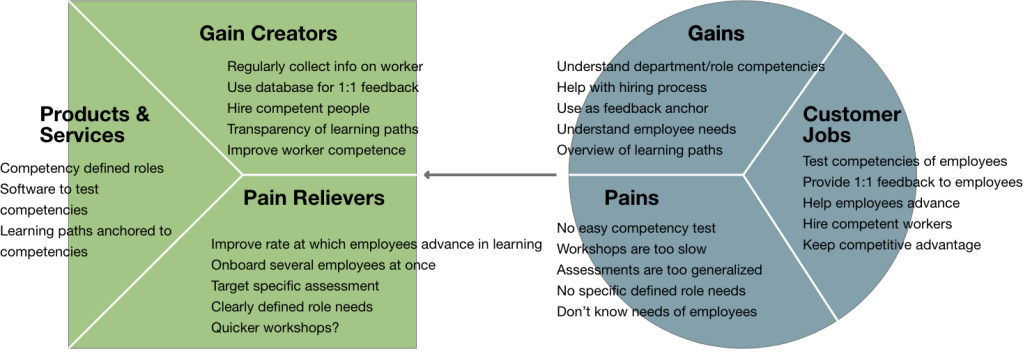
Before I begin with the challenge, let me give a bit of a background. The company that I was working with has only been in existence since summer of 2019 (that’s a year and a half from the time I am writing this). Companies that are early on in this stage of work have a lot more complexities than simply re-analysing their user flow. Thus, when designing the user flow, I also needed to dig into situations such as value proposition and business development. I absolutely love such challenges; working with a bigger picture helps to ensure that I can deliver a high quality product based on a plethora of information. Upon further discussion with the company, a value proposition was not something that they had very much focused on in the beginning. I took the liberty of creating one for this project which would help me deliver a more solid product. This was also shared with the company for their future use.
Value Proposition for EdTech Company
Another challenge of this project was that I was not simply given user interview information in order to make the flows. Many of the ideas of how the user flow (and thus to a certain extent the product and services being offered) needed to look like, was based off past experience and less so from user feedback. Although I was provided with a few user interviews, this part of the project proved particularly challenging to me in regards of who I was designing for.
Creating Scenarios
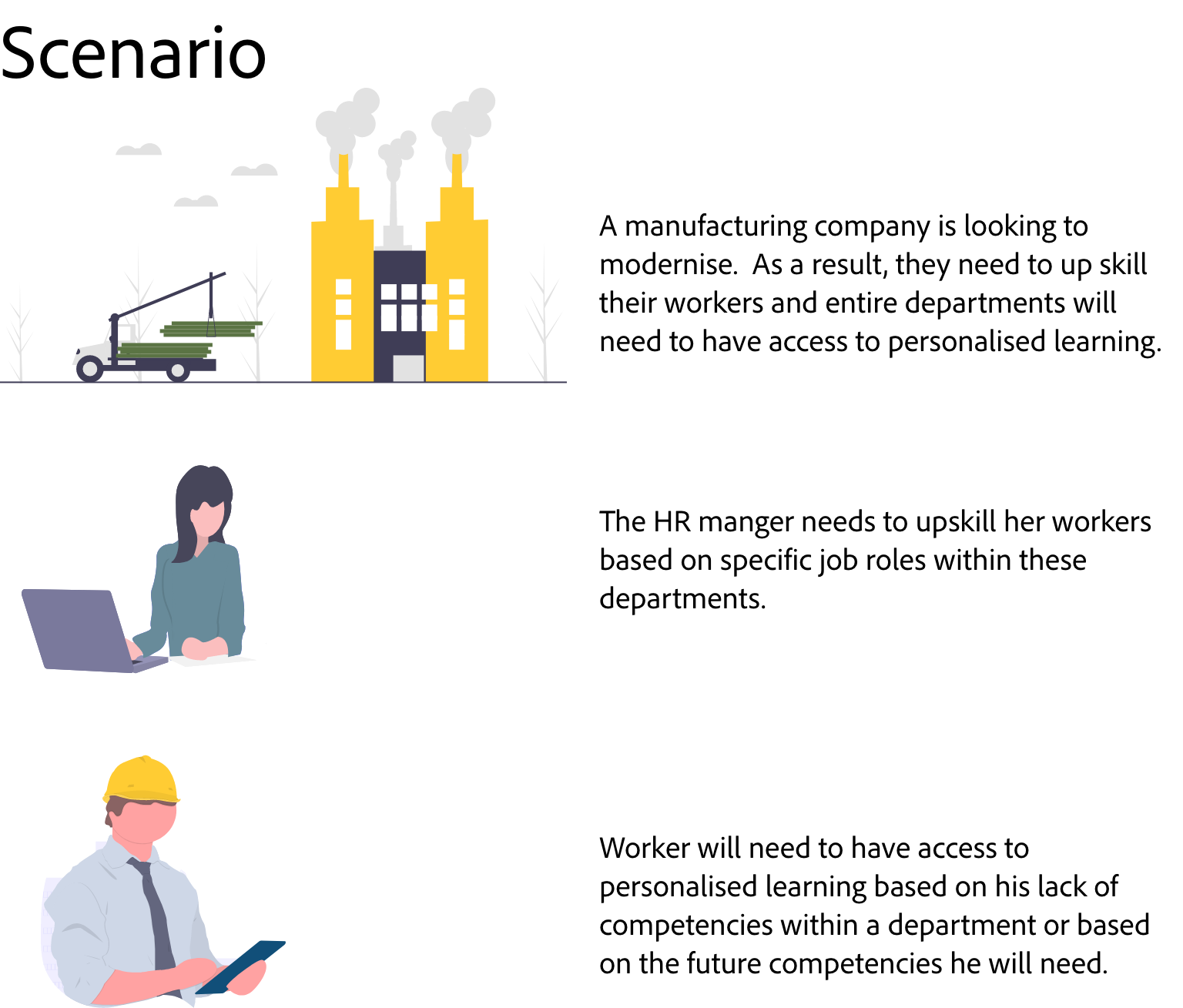
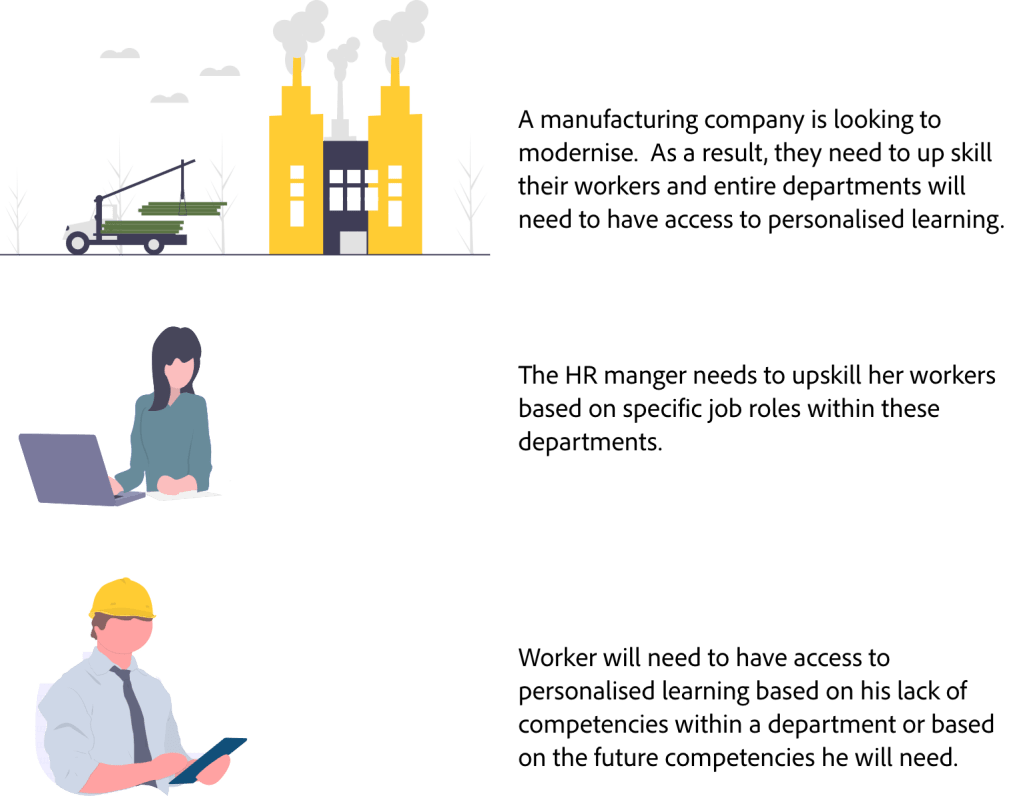
At this phase of the process, once I had gathered as much information as possible, I began to see that this task did not just involve one user flow, but several (including the HR employee, line manager, employee and the Edtech company itself). In the end, I decided to focus on two personas (more about that later). For now, I decided it was wise to create a scenario in order to help build a bit of a background for the personas and user flows as the user interviews section was coming up short.
User Personas
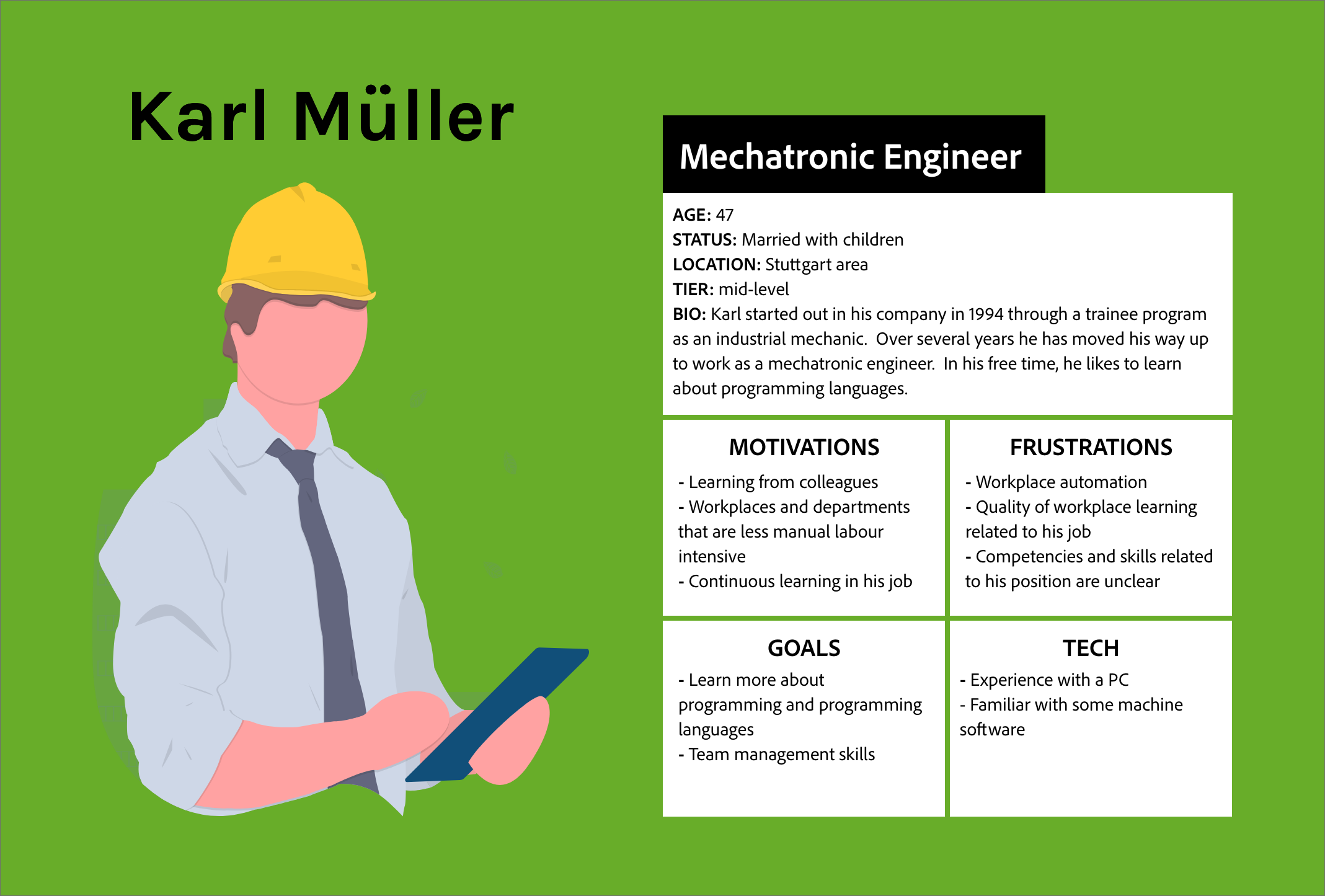
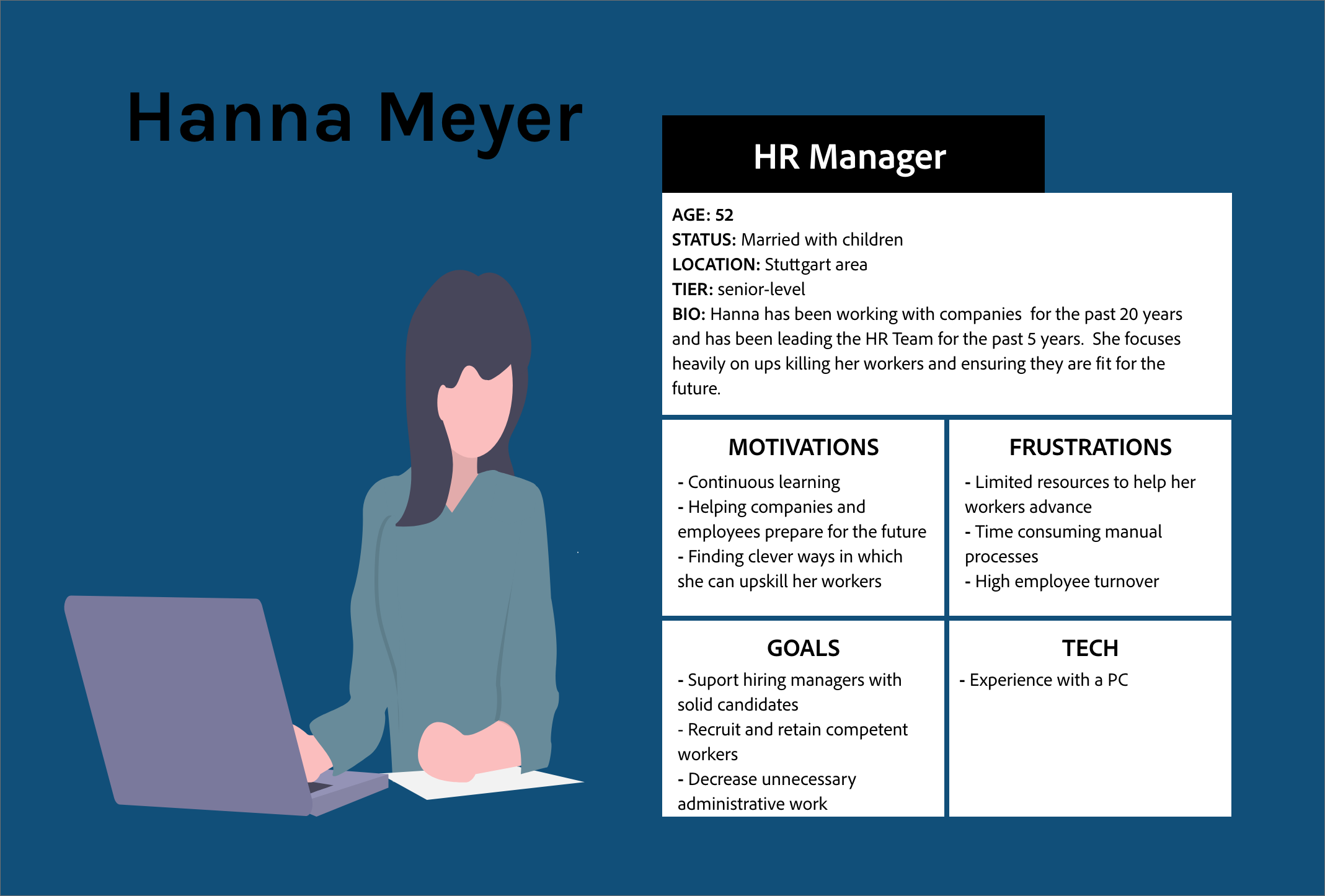
Based on given information of company background, value proposition, user interviews and the scenario, I was able to create two personas. Hanna is an HR manager and has been given the task of up-skilling entire departments in the manufacturing company she works for. Karl is a mechatronic engineer who needs to be up-skilled at work.
User Flows
Once the personas were identified, it was time for me to perfect the user flows. As this project had many complications with many scenarios that lead into one another, it was necessary to keep other flows (from the one I was working on) in the back of my mind.
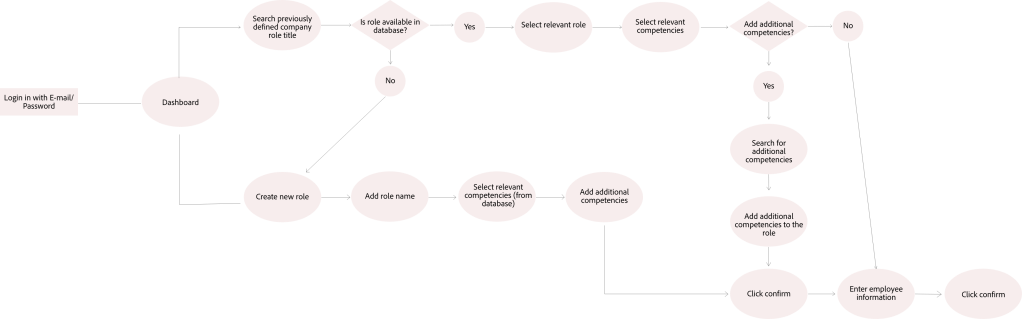
As much of the up front onboarding work landed on Hanna’s shoulders, I started with her user flow first. If a company is to onboard several dozen or hundreds of workers online at once, it is necessary for company X to save a collection of databases that can be referred to at a later point. Thus, I gave Hanna the possibility of searching for previously created role competencies or creating a new one.
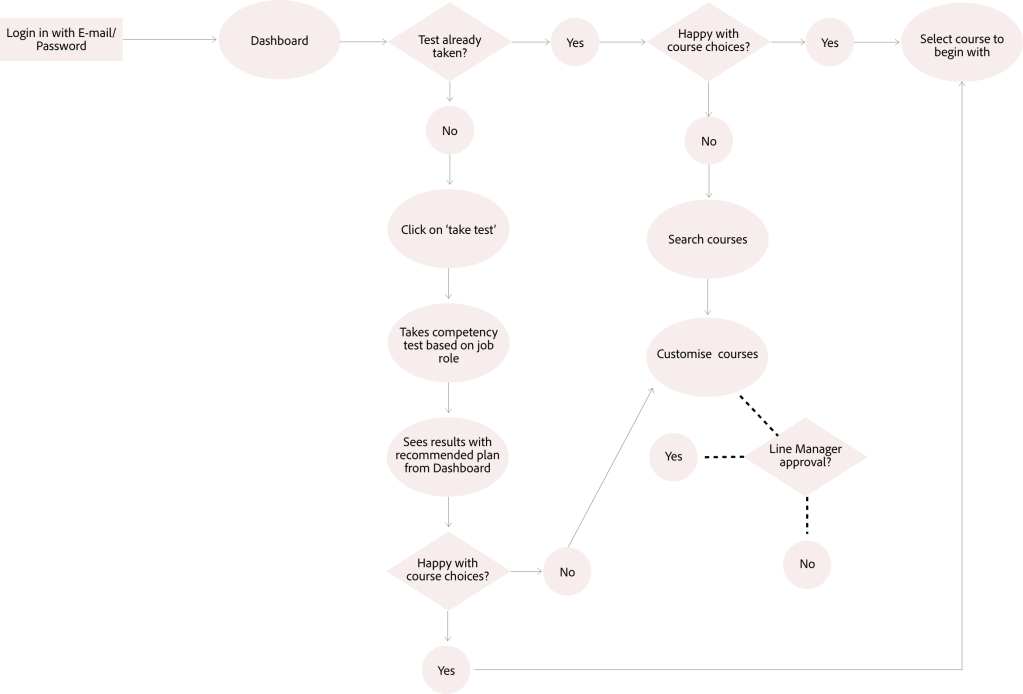
Karl’s user flow begins where Hanna’s ends. Instead of Hanna guessing the competencies of her workers, her workers are given a competency test to take themselves, thus relieving the burden of the HR manager. By assessing the competencies of workers individually by the workers themselves, the software used to generate personalised learning paths becomes more targeted.
Looking Ahead
Identifying user personas and mapping user flows helps to identify the next areas of opportunities. In order to make the onboarding process run as smooth as possible, and to successfully identify worker competencies, a software to test competencies and skills needs to be identified. Once this is created, it can be pushed out to workers to identify gaps in their skills. Additionally, it can be used as a tool for line managers to use in 1:1 meetings and in creating job descriptions.
 Anne Fischer Design